MICROSOFT OFFICE SHORT COURSES
Access 2016 - Intermediate

Course Overview
Your training and experience using Microsoft® Access® 2016 has given you basic database management skills, such as creating tables, designing forms and reports, and building queries. In this course, you will expand your knowledge of relational database design, write advanced queries, structure existing data, validate data entered into a database, and customize reports. Extending your knowledge of Microsoft Access 2016 will result in a robust, functional database for your users.
Duration
12 hours. Training times can be arranged in more manageable sessions of 3 hours over 4 days. It can be arranged according to your date and time requirements and can be delivered virtually or on-site at your premises.
Delivery Method
Training times can be arranged according to your date and times requirements, delivered virtually or on-site at your premises by one of our professional facilitators. Alternatively, you can join a virtual public course by clicking on the Register Now button.
Who Should Attend
This course is designed for students wishing to gain intermediate-level skills or individuals whose job responsibilities include constructing relational databases, performing database maintenance, or creating advanced queries and reports.
Prerequisites
To ensure your success, it is recommended you have completed Microsoft® Office Access® 2016: Part 1 or possess equivalent knowledge. It is also suggested that you have end-user skills with any current version of Windows, including being able to start programs, switch between programs, locate saved files, close programs, and use a browser to access websites. You can obtain this level of skills and knowledge by taking either of the following Logical Operations courses, or any similar courses in general Microsoft Windows skills:
- Using Microsoft® Windows® 10 or alternatively;
- Microsoft® Windows® 10: Transition from Windows® 7 and
- Microsoft® Office Access® 2016: Beginners
Course Content
1. Designing a Relational Database
- Relational database design
- Create a table
- Create table relationships
2. Joining Tables
- Create query joins
- Relate data within a table
- Work with subdatasheets
3. Using Data Validation
- Use field validation
- Use form and record validation
4. Creating Advanced Queries
- Create parameter queries
- Summarise data
- Create subqueries
- Create action queries
- Create unmatched and duplicate queries
5. Organising a Database for Efficiency
- Data normalisation
- Create a Junction table
- Improve table structure
6. Using Advanced Reporting Techniques
- Include control formatting in a report
- Add a calculated field to a report
- Add a subreport to an existing report
The Secret to Success
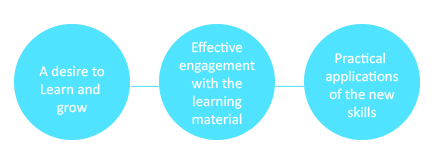
Short courses are an easy and effective way to upskill your people. This enables them to apply their new knowledge in your workplace immediately.

| Knowing the learning and development needs |
| Choosing the right content and level |
| Matching a trainer to your company culture |
| Obtaining feedback at relevant intervals |
| Short Courses |
Business Skills
Communications
Leadership
Management
Microsoft Office
Money Management
Project Management
Sales and Marketing
SHORT COURSE BENEFITS